

Cruel means causing pain, suffering, or distress without caring about the harm being done. Common synonyms include harsh, ruthless, heartless, brutal, merciless, and unkind. The best alternative depends on whether you want to describe someone’s behavior, a painful action, an unfair decision, or a lack of compassion.
Quick synonym list
Here are useful alternatives for cruel, grouped by meaning and tone.
Synonym | Best use |
|---|---|
Harsh | Severe treatment or criticism |
Unkind | Thoughtless or hurtful behavior |
Mean | Intentionally hurtful behavior |
Heartless | A lack of compassion |
Ruthless | Achieving a goal without caring who suffers |
Merciless | Showing no pity |
Brutal | Extremely violent or severe treatment |
Callous | Insensitivity to another person’s pain |
Inhumane | Treatment that ignores human dignity |
Sadistic | Taking pleasure in another person’s suffering |
Vicious | Deliberately aggressive or harmful behavior |
Malicious | Intending to cause harm |
Spiteful | Acting to hurt someone out of resentment |
Savage | Extremely violent or fierce |
Cold-blooded | Acting without emotion or remorse |
Unfeeling | Showing little or no emotion or sympathy |
Uncompassionate | Lacking concern for others |
Unforgiving | Unwilling to pardon mistakes or offenses |
Pitiless | Showing no pity |
Severe | Very strict, serious, or intense |
Oppressive | Using power to control or mistreat others |
Tyrannical | Exercising power in a cruel, unfair way |
Inconsiderate | Failing to consider others’ feelings |
Insensitive | Not recognizing or caring about others’ feelings |
Barbaric | Extremely cruel or uncivilized |
Ferocious | Extremely fierce or aggressive |
Vindictive | Seeking revenge or punishment |
Relentless | Continuing without stopping or easing |
Unjust | Unfair or morally wrong |
Abusive | Using harmful or cruel treatment |
Punishing | Extremely difficult or demanding |
Callous-hearted | Having little sympathy or compassion |
Unmerciful | Showing no mercy |
Remorseless | Showing no guilt or regret |
Inexorable | Impossible to stop or persuade; often used for harsh forces or processes |
Not every word is interchangeable with cruel. For example, ruthless emphasizes a willingness to sacrifice others, while sadistic suggests pleasure in their suffering.
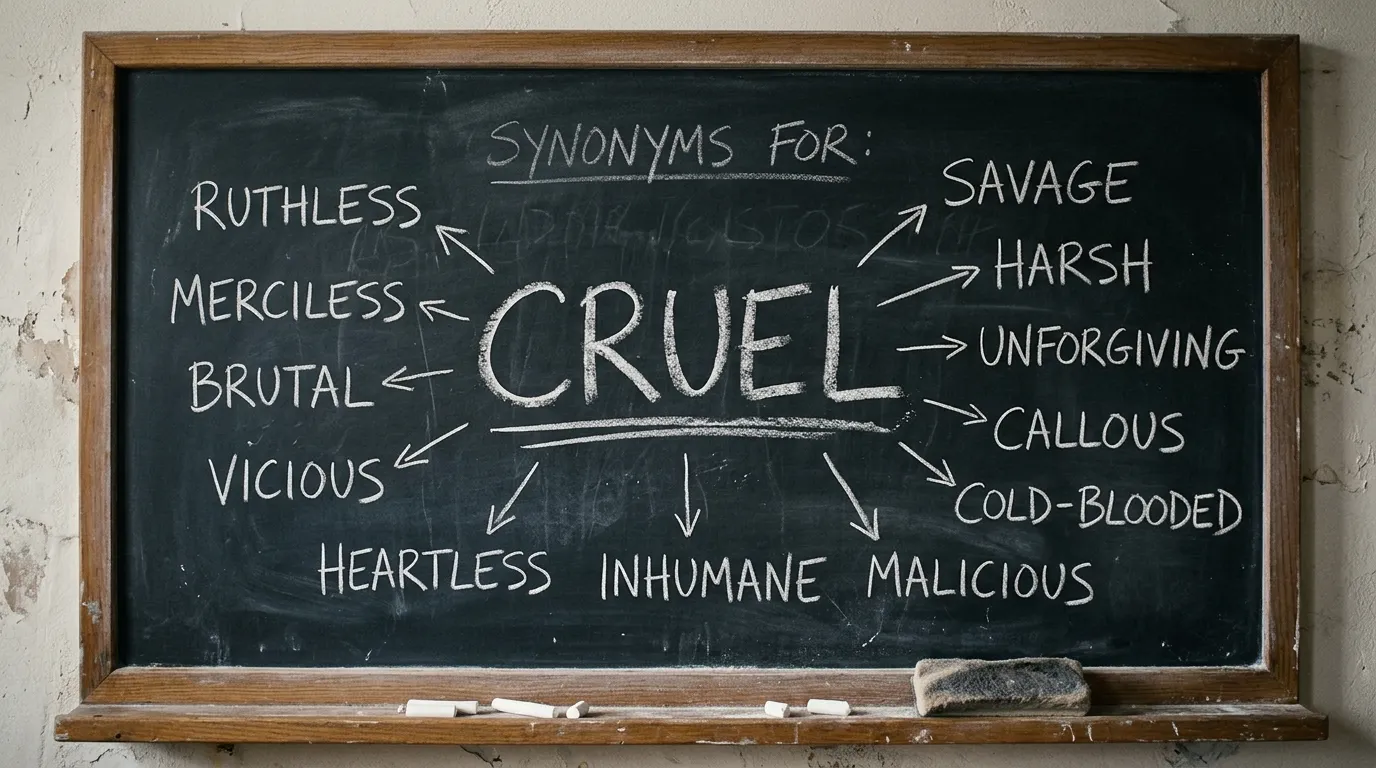
1. The closest synonyms for cruel
These words are useful when you want to describe someone who deliberately causes pain or treats others without compassion.
Harsh
Meaning: Severe, strict, or unpleasant.
Harsh is a close alternative when describing treatment, criticism, or punishment. It does not always imply an intention to hurt someone.
Example: The teacher was harsh with students who missed their assignments.
Heartless
Meaning: Showing no sympathy or concern for others.
Heartless emphasizes a lack of compassion, especially when someone is suffering.
Example: It was heartless to ignore her request for help.
Ruthless
Meaning: Willing to cause harm or disregard others to achieve a goal.
Ruthless is especially useful for describing ambition, competition, and the exercise of power.
Example: The ruthless executive fired dozens of employees to protect profits.
Merciless
Meaning: Showing no pity or mercy.
Merciless is stronger than harsh and often describes someone who refuses to stop hurting or punishing others.
Example: The army launched a merciless attack on the village.
Brutal
Meaning: Extremely violent, harsh, or severe.
Brutal is a strong word that often describes physical violence, severe criticism, or difficult conditions.
Example: The victim endured a brutal attack.
Callous
Meaning: Insensitive to the pain or feelings of others.
Callous is particularly useful when someone’s behavior shows a lack of concern for another person’s suffering.
Example: His callous response upset the grieving family.
2. Cruel synonyms by context
Context | Best alternatives |
|---|---|
Cruel person | Heartless, callous, unkind |
Cruel behavior | Mean, spiteful, malicious |
Cruel punishment | Harsh, severe, brutal |
Cruel leader | Ruthless, tyrannical, oppressive |
Cruel joke | Mean, hurtful, vicious |
Cruel treatment | Inhumane, abusive, merciless |
Cruel words | Harsh, cutting, hurtful |
Cruel decision | Unjust, heartless, callous |
3. Formal and professional alternatives
For formal writing, choose words that describe the specific type of cruelty rather than using a more complicated word simply to sound sophisticated.
Inhumane: Best for treatment that disregards human dignity.
Unjust: Best when the cruelty involves unfairness.
Oppressive: Best for cruel control or restrictions.
Abusive: Best for harmful treatment, especially when it involves power or control.
Tyrannical: Best for cruel and unfair use of authority.
Example:
Original: The manager was cruel to the employees.
More precise: The manager subjected employees to abusive treatment.
The revised sentence is more specific, but it also makes a stronger claim. Use it only when the behavior supports that description.
4. Cruel vs. similar words
Word | Main difference |
|---|---|
Cruel | Causes suffering without adequate concern for others |
Mean | Informal and often less severe |
Harsh | Severe, but not always deliberately harmful |
Ruthless | Willing to harm others to achieve a goal |
Heartless | Lacking sympathy or compassion |
Sadistic | Takes pleasure in another person’s suffering |
Callous | Insensitive to pain or distress |
Vicious | Aggressively harmful or violent |
5. Sentence transformations
Original: She was cruel to her younger brother.
Alternative: She was unkind to her younger brother.
Why: Unkind is less intense and may suit ordinary thoughtless behavior.
Original: The dictator was cruel to his people.
Alternative: The dictator was tyrannical toward his people.
Why: Tyrannical emphasizes the abuse of power.
Original: He made a cruel comment about her appearance.
Alternative: He made a hurtful comment about her appearance.
Why: Hurtful focuses on the effect of the comment rather than the speaker’s character.
Original: The company made a cruel decision.
Alternative: The company made a callous decision.
Why: Callous highlights a lack of concern for the people affected.
Original: The punishment was cruel.
Alternative: The punishment was inhumane.
Why: Inhumane emphasizes a lack of human dignity or compassion.
Original: The coach was cruel during practice.
Alternative: The coach was harsh during practice.
Why: Harsh is appropriate for severe training or criticism that may not be intended to cause suffering.
Original: The villain was cruel.
Alternative: The villain was sadistic.
Why: Sadistic is more specific: it suggests the villain enjoys causing suffering.
Original: The leader was cruel in business.
Alternative: The leader was ruthless in business.
Why: Ruthless emphasizes achieving success without regard for the people harmed.

6. Common mistakes
Using harsh when you mean cruel: Harsh can describe necessary discipline. Cruel implies a more troubling disregard for suffering.
Using sadistic as a general synonym: Sadistic suggests pleasure in suffering, not simply causing it.
Using ruthless for every cruel act: Ruthless usually involves pursuing a goal without compassion.
Using vicious for ordinary criticism: Vicious implies unusually aggressive or harmful behavior.
Using inhumane for minor unkindness: Inhumane is a strong word, often suited to serious mistreatment.
Using cruel when hurtful is more accurate: Hurtful describes an effect and does not necessarily prove cruel intent.
Assuming unkind and heartless have equal strength: Heartless is much stronger and suggests a serious lack of compassion.
Replacing cruel with severe in every sentence: Severe can describe intensity without implying moral wrongdoing.
7. Which synonym should you choose?
Choose unkind for everyday behavior that hurts someone’s feelings.
Choose harsh for strict treatment, criticism, or punishment.
Choose heartless when someone shows no compassion.
Choose ruthless when someone harms others to achieve a goal.
Choose merciless when someone refuses to show pity.
Choose brutal for extreme violence or severity.
Choose callous when someone is insensitive to suffering.
Choose sadistic when someone takes pleasure in causing pain.
8. When not to replace cruel
Sometimes cruel is the clearest and most natural word.
If you are describing behavior that deliberately causes suffering without compassion, cruel communicates the meaning directly.
Do not replace it with a stronger word just to avoid repetition. Calling someone sadistic, abusive, or tyrannical can introduce claims that the original sentence did not make.
For example:
“That was a cruel thing to say” is clear and natural.
“That was a sadistic thing to say” suggests the speaker enjoyed causing pain.
The second sentence is not simply a more sophisticated version of the first.
9. Frequently asked questions
What is the strongest synonym for cruel?
Sadistic, brutal, and merciless can be especially strong, but they emphasize different things. Sadistic suggests pleasure in suffering, brutal suggests extreme violence or severity, and merciless suggests an absence of pity.
What is a more polite word for cruel?
Unkind is often a softer alternative. It describes hurtful behavior without making as strong a judgment about someone’s character.
What is a formal synonym for cruel?
Inhumane, callous, oppressive, and unjust can work in formal writing, depending on the meaning.
Is ruthless the same as cruel?
No. Ruthless emphasizes a willingness to harm others to achieve a goal. Cruel emphasizes causing suffering without adequate concern for others.
What is the opposite of cruel?
Common antonyms include kind, compassionate, caring, merciful, humane, and considerate.
Is mean a synonym for cruel?
Yes, in some contexts. Mean is more informal and often less intense. Cruel usually suggests more serious or deliberate harm.
Key takeaways
Cruel describes behavior that causes suffering without sufficient concern for others.
Harsh, heartless, ruthless, and merciless are useful alternatives, but they emphasize different qualities.
Choose a synonym based on the action, intention, severity, and context.
Avoid stronger words such as sadistic unless their specific meaning is accurate.
Keep cruel when it is the clearest and most natural choice.