
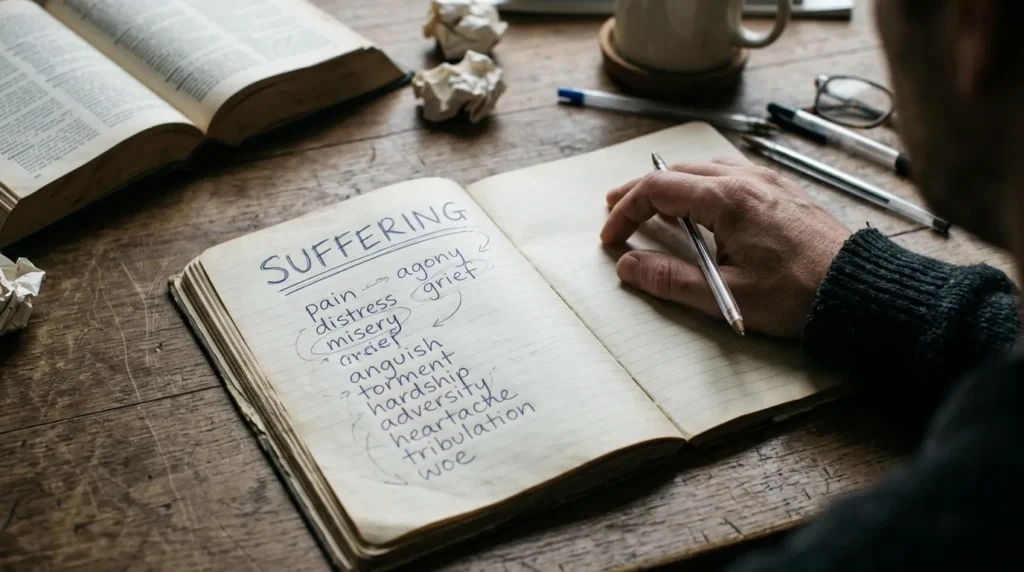
Common synonyms for suffering include pain, distress, hardship, agony, anguish, misery, torment, adversity, and discomfort. The best alternative depends on the type and intensity of suffering. Use pain for physical or emotional hurt, anguish for deep emotional distress, hardship for difficult life conditions, and agony for extreme pain.
Quick Synonym List for Suffering
Here are useful alternatives grouped by meaning and intensity.
General suffering: pain, distress, discomfort, hardship, misery
Physical suffering: ache, agony, soreness, torment, physical pain
Emotional suffering: anguish, heartache, grief, sorrow, emotional distress
Severe suffering: agony, torment, torture, intense pain, devastation
Long-term suffering: hardship, adversity, affliction, ongoing distress
Mental suffering: anxiety, despair, anguish, emotional turmoil
Suffering caused by difficult conditions: deprivation, struggle, hardship, adversity
Formal or literary alternatives: affliction, tribulation, torment, anguish, woe
Informal alternatives: hurt, pain, going through a hard time, having a rough time
These words are not exact substitutes in every context. Grief usually relates to loss, hardship describes difficult circumstances, and agony suggests extreme pain.
What Does Suffering Mean?
Suffering is the experience of physical pain, emotional distress, mental anguish, or serious difficulty. It can be temporary or long-lasting and may result from illness, injury, loss, conflict, poverty, or other difficult circumstances.
Examples:
“The injured athlete experienced considerable suffering.”
“The family endured years of financial hardship and suffering.”
“Her suffering after the loss was difficult to describe.”
Suffering is commonly used as a noun, as in “the suffering caused by the disaster.” It can also be the present participle of suffer, as in “She is suffering from a painful injury.”
The best synonym depends on whether you mean physical pain, emotional hurt, mental distress, or difficult living conditions.
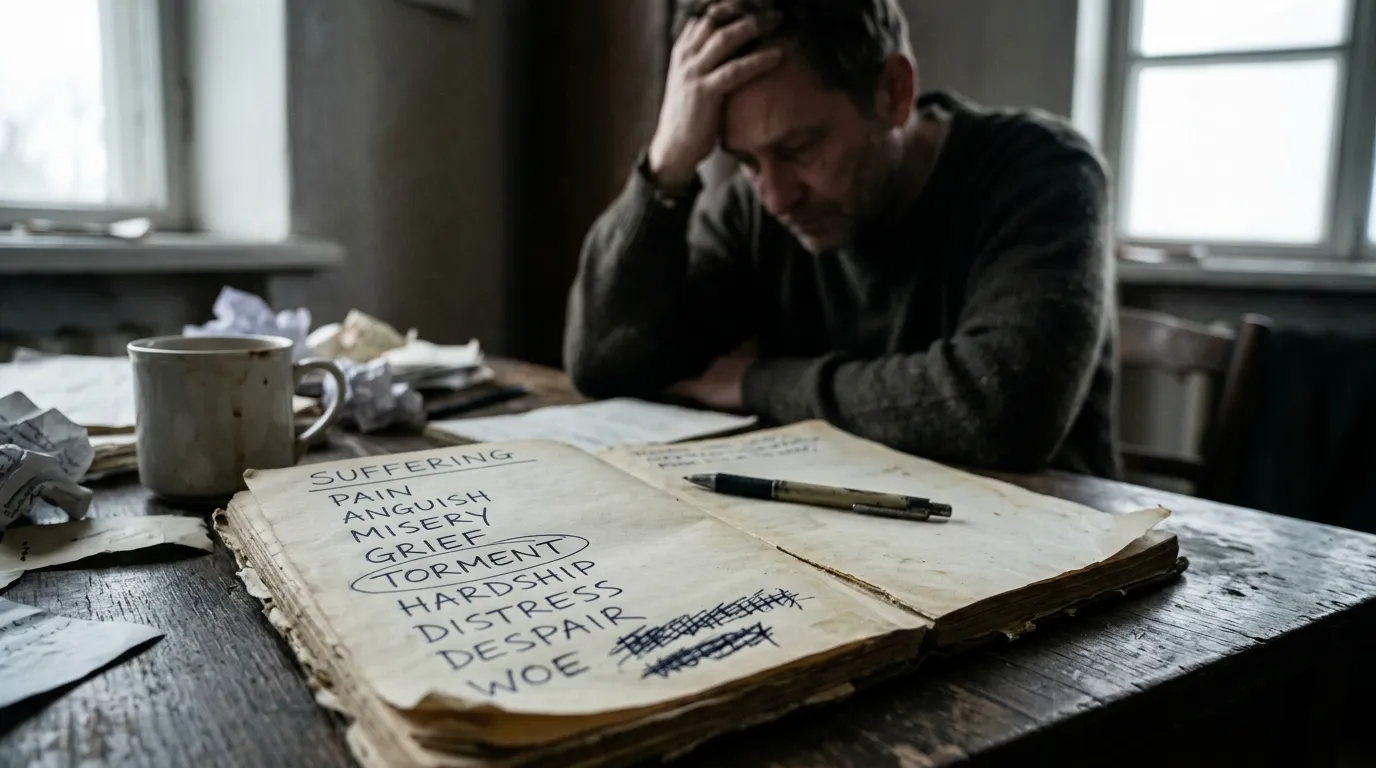
Closest Synonyms for Suffering
1. Pain
Meaning: Physical discomfort or emotional hurt.
Pain is one of the closest and most common alternatives to suffering. It can describe anything from a mild ache to severe physical or emotional distress.
Original: He experienced suffering after the accident.
Revised: He experienced pain after the accident.
Best for: Injuries, illness, emotional hurt, and general discomfort.
Watch out: Pain can describe a specific sensation, while suffering often emphasizes the broader experience or burden of enduring it.
2. Distress
Meaning: Severe worry, sadness, discomfort, or emotional upset.
Original: The news caused her great suffering.
Revised: The news caused her great distress.
Best for: Emotional difficulties, upsetting events, and formal or professional writing.
Watch out: Distress often emphasizes a troubled emotional state. It can also refer to physical or practical emergencies, as in “a ship in distress.”
3. Hardship
Meaning: A condition or experience that causes difficulty, deprivation, or struggle.
Original: The community endured years of suffering.
Revised: The community endured years of hardship.
Best for: Poverty, difficult living conditions, financial problems, and prolonged challenges.
Watch out: Hardship describes difficult circumstances rather than necessarily describing the pain a person feels.
4. Agony
Meaning: Extreme physical pain or intense emotional suffering.
Original: She experienced suffering while waiting for the results.
Revised: She experienced agony while waiting for the results.
Best for: Severe pain, intense worry, and dramatic or emotional descriptions.
Watch out: Agony is much stronger than ordinary suffering or discomfort. Use it when the intensity justifies it.
5. Anguish
Meaning: Deep emotional pain, distress, or sorrow.
Original: His suffering was clear after the loss.
Revised: His anguish was clear after the loss.
Best for: Grief, heartbreak, emotional trauma, and intense inner distress.
Watch out: Anguish primarily emphasizes emotional suffering rather than physical pain.
6. Misery
Meaning: A state of great unhappiness, discomfort, or distress.
Original: The long winter caused widespread suffering.
Revised: The long winter caused widespread misery.
Best for: Unhappiness, poor living conditions, prolonged discomfort, and difficult experiences.
Watch out: Misery often emphasizes how unpleasant or unhappy an experience feels. It can sound more emotional or judgmental than suffering.
7. Torment
Meaning: Severe physical or emotional pain that continues or feels difficult to escape.
Original: The uncertainty caused him suffering.
Revised: The uncertainty caused him torment.
Best for: Persistent worry, painful memories, intense emotional conflict, and severe discomfort.
Watch out: Torment suggests especially intense or prolonged distress. It can also mean deliberately causing someone severe pain.
8. Discomfort
Meaning: Mild or moderate physical unease or emotional awkwardness.
Original: The treatment caused some suffering.
Revised: The treatment caused some discomfort.
Best for: Mild pain, temporary physical unease, and awkward situations.
Watch out: Discomfort is much weaker than suffering. It may minimize the seriousness of a difficult experience if used carelessly.
9. Grief
Meaning: Deep sorrow, especially after the death of someone or another major loss.
Original: She experienced suffering after her father’s death.
Revised: She experienced deep grief after her father’s death.
Best for: Bereavement, personal loss, and profound sadness.
Watch out: Grief is specifically connected to loss. It is not a general replacement for physical suffering or every kind of emotional pain.
10. Heartache
Meaning: Deep emotional sadness or pain, often related to love, loss, or disappointment.
Original: The separation caused him suffering.
Revised: The separation caused him heartache.
Best for: Breakups, family difficulties, disappointment, and personal loss.
Watch out: Heartache is more personal and emotional than the broader term suffering.
11. Sorrow
Meaning: A feeling of deep sadness or unhappiness.
Original: Her suffering was reflected in her words.
Revised: Her sorrow was reflected in her words.
Best for: Sadness, grief, loss, and reflective or literary writing.
Watch out: Sorrow emphasizes sadness rather than physical pain or material hardship.
12. Affliction
Meaning: A condition or problem that causes significant distress or suffering.
Original: The illness brought years of suffering.
Revised: The illness brought years of affliction.
Best for: Illness, persistent difficulties, and formal or literary descriptions.
Watch out: Affliction often refers to the cause or condition associated with suffering, rather than the feeling itself.
13. Adversity
Meaning: Difficult or unfavorable circumstances that challenge a person or group.
Original: They learned to work together through suffering.
Revised: They learned to work together through adversity.
Best for: Life challenges, setbacks, difficult circumstances, and motivational or formal writing.
Watch out: Adversity focuses on the challenges a person faces, not necessarily the emotional or physical pain those challenges cause.
14. Tribulation
Meaning: A serious trial, difficulty, or period of distress.
Original: The family endured much suffering during the war.
Revised: The family endured many tribulations during the war.
Best for: Formal writing, historical accounts, religious contexts, and literary descriptions.
Watch out: Tribulation is more formal and less common in everyday conversation. It often emphasizes a difficult experience or trial.
15. Despair
Meaning: A state of almost complete loss of hope.
Original: The prolonged suffering left him without hope.
Revised: The prolonged suffering left him in despair.
Best for: Hopelessness, severe disappointment, and emotional crises.
Watch out: Despair describes a person’s emotional state, not suffering in general. Someone can suffer without losing hope.
16. Struggle
Meaning: A difficult effort or challenging experience.
Original: Her suffering continued throughout the recovery.
Revised: Her struggle continued throughout the recovery.
Best for: Recovery, difficult goals, ongoing problems, and personal challenges.
Watch out: Struggle can imply active effort to overcome a problem, while suffering emphasizes the pain or distress experienced.
17. Deprivation
Meaning: The lack of basic needs, resources, comforts, or opportunities.
Original: The children experienced suffering because they lacked food and shelter.
Revised: The children experienced deprivation because they lacked food and shelter.
Best for: Poverty, lack of necessities, and difficult social conditions.
Watch out: Deprivation describes what is missing. It does not automatically express the emotional or physical suffering caused by that lack.
18. Torture
Meaning: Extreme physical or psychological pain, often deliberately inflicted.
Original: The prisoners endured severe suffering.
Revised: The prisoners endured severe torture.
Best for: Situations involving deliberately inflicted extreme pain or, in some figurative uses, intense distress.
Watch out: Torture is much stronger and more specific than suffering. Do not use it for ordinary discomfort or hardship unless the context supports the term.
19. Woe
Meaning: Great sorrow, distress, or trouble.
Original: The poem describes the suffering of the poor.
Revised: The poem describes the woes of the poor.
Best for: Literary writing, poetry, storytelling, and formal expressions of sorrow.
Watch out: Woe is often used in the plural, as in “financial woes,” and may sound old-fashioned in everyday speech.
20. Emotional Turmoil
Meaning: A state of intense and often conflicting emotions.
Original: She experienced suffering after the difficult decision.
Revised: She experienced emotional turmoil after the difficult decision.
Best for: Inner conflict, stressful decisions, relationship problems, and personal crises.
Watch out: Emotional turmoil describes a turbulent emotional state, not necessarily physical pain or difficult material conditions.
Synonyms for Suffering by Context
Physical Suffering
Use these words when describing pain caused by injury, illness, or physical conditions.
Pain: a general term for physical discomfort.
Agony: extreme physical pain.
Ache: a persistent, often dull pain.
Soreness: tenderness or pain, often after physical activity or injury.
Torment: intense or persistent pain.
Discomfort: mild or moderate physical unease.
Example: “The patient experienced severe pain after the injury.”
Choosing the right word: Use ache for a dull, ongoing pain and agony for extreme pain. Use discomfort when the symptoms are mild.
Emotional Suffering
These alternatives describe sadness, heartbreak, or deep emotional distress.
Anguish: intense emotional pain.
Heartache: sadness related to love, loss, or disappointment.
Grief: sorrow after a major loss.
Sorrow: deep sadness.
Misery: great unhappiness.
Emotional turmoil: intense or conflicting feelings.
Example: “She struggled with grief after losing someone close to her.”
Choosing the right word: Use grief when the suffering follows a loss, heartache for personal emotional pain, and anguish for especially intense distress.
Mental Suffering
These terms describe psychological distress or difficult mental states.
Distress: emotional or mental upset.
Anxiety: worry or fear about possible events.
Anguish: deep emotional pain.
Despair: loss of hope.
Torment: persistent, intense distress.
Mental anguish: severe psychological or emotional pain.
Example: “The uncertainty caused considerable anxiety.”
Choosing the right word: Anxiety is appropriate for worry and fear, while despair is more suitable when someone has lost hope. These terms are related but not interchangeable.
Suffering Caused by Life Difficulties
Use these words when describing difficult circumstances rather than pain alone.
Hardship: difficult living conditions or challenges.
Adversity: unfavorable circumstances.
Struggle: a difficult ongoing experience or effort.
Deprivation: lack of essential needs or resources.
Tribulation: a serious trial or difficulty.
Affliction: a condition that causes distress.
Example: “The family overcame years of financial hardship.”
Choosing the right word: Use hardship for difficult conditions, deprivation for lacking necessities, and adversity for broader challenges.
Severe or Prolonged Suffering
These words convey a stronger degree of pain or distress.
Agony: extreme physical or emotional pain.
Torment: intense or persistent distress.
Anguish: profound emotional pain.
Misery: great unhappiness or discomfort.
Affliction: a serious or ongoing source of suffering.
Tribulation: a major trial or period of difficulty.
Example: “The uncertainty became a source of constant torment.”
Choosing the right word: Match the intensity to the situation. Agony and torment are much stronger than discomfort.

Suffering Synonyms: Comparison Table
| Word | Main meaning | Intensity | Best use |
|---|---|---|---|
| Pain | Physical or emotional hurt | Mild to severe | General descriptions of hurt |
| Distress | Worry, upset, or serious discomfort | Moderate to severe | Emotional and mental difficulties |
| Hardship | Difficult circumstances | Varies | Financial and life challenges |
| Agony | Extreme pain | Very high | Severe physical or emotional pain |
| Anguish | Deep emotional pain | High | Grief and emotional distress |
| Misery | Great unhappiness or discomfort | Moderate to high | Difficult experiences and poor conditions |
| Torment | Intense or persistent pain | High | Ongoing emotional or physical distress |
| Discomfort | Mild or moderate unease | Low to moderate | Temporary pain or awkwardness |
| Grief | Sorrow following a loss | Varies | Bereavement and major loss |
| Heartache | Personal emotional pain | Moderate to high | Relationships and disappointment |
| Adversity | Difficult circumstances | Varies | Challenges and setbacks |
| Despair | Loss of hope | High | Hopelessness and deep disappointment |
| Deprivation | Lack of basic needs or resources | Varies | Poverty and social hardship |
| Affliction | A condition causing distress | Varies | Illness and ongoing difficulties |
| Tribulation | A serious trial or difficulty | Moderate to high | Formal and literary writing |
How to Choose the Best Synonym for Suffering
The right synonym depends on what causes the suffering and how you want to describe it.
Choose pain for physical hurt or general emotional hurt.
Choose distress for serious worry or emotional upset.
Choose hardship for difficult circumstances, such as poverty or financial problems.
Choose agony for extreme physical or emotional pain.
Choose anguish for deep emotional suffering.
Choose misery for prolonged unhappiness or unpleasant conditions.
Choose torment for intense or persistent pain.
Choose grief for sorrow caused by loss.
Choose adversity for difficult circumstances or setbacks.
Choose despair when someone has lost hope.
Choose deprivation when suffering is connected to a lack of basic needs.
Choose affliction for an illness or condition that causes ongoing distress.
If the cause, intensity, or type of suffering is unclear, the original word suffering may be the most accurate choice.
Before-and-After Examples: Replacing Suffering in Sentences
These examples show how different synonyms can make your meaning more specific.
Original: The patient experienced suffering after surgery.
Revised: The patient experienced pain after surgery.
Why: Pain is more direct when describing physical discomfort.Original: The news caused her great suffering.
Revised: The news caused her great distress.
Why: Distress emphasizes emotional upset.Original: The family endured years of suffering because of poverty.
Revised: The family endured years of hardship because of poverty.
Why: Hardship focuses on difficult living conditions.Original: He experienced suffering while waiting for the results.
Revised: He experienced agony while waiting for the results.
Why: Agony conveys extreme distress and uncertainty.Original: Her suffering after the loss was difficult to describe.
Revised: Her anguish after the loss was difficult to describe.
Why: Anguish emphasizes deep emotional pain.Original: The harsh conditions caused widespread suffering.
Revised: The harsh conditions caused widespread misery.
Why: Misery emphasizes unhappiness and unpleasant living conditions.Original: The painful memories caused him suffering.
Revised: The painful memories caused him torment.
Why: Torment suggests intense, persistent distress.Original: The treatment caused some suffering.
Revised: The treatment caused some discomfort.
Why: Discomfort works when the effects are relatively mild.Original: She experienced suffering after her mother’s death.
Revised: She experienced deep grief after her mother’s death.
Why: Grief specifically describes sorrow following a loss.Original: The separation caused him suffering.
Revised: The separation caused him heartache.
Why: Heartache emphasizes personal emotional pain.Original: They continued to face suffering after losing their jobs.
Revised: They continued to face adversity after losing their jobs.
Why: Adversity focuses on the difficult circumstances they faced.Original: The illness was a source of suffering for many years.
Revised: The illness was a long-term affliction.
Why: Affliction identifies the condition associated with ongoing suffering.Original: The setbacks filled him with suffering and hopelessness.
Revised: The setbacks filled him with despair.
Why: Despair focuses on the loss of hope.Original: The children suffered because they lacked food and shelter.
Revised: The children experienced deprivation because they lacked food and shelter.
Why: Deprivation identifies the lack of essential resources.Original: The community endured suffering during the crisis.
Revised: The community endured serious tribulations during the crisis.
Why: Tribulations emphasizes severe trials and difficulties.
Common Mistakes When Using Synonyms for Suffering
1. Treating pain and suffering as identical
Pain usually refers to physical or emotional hurt. Suffering often describes the broader experience of enduring pain, distress, or hardship.
For a specific injury, pain may be clearer. For a difficult period involving several problems, suffering may be more suitable.
2. Using agony for mild discomfort
Agony implies extreme pain. Using it for a minor inconvenience can exaggerate the experience.
Mild: “The shoes caused discomfort.”
Severe: “The injury caused agony.”
3. Confusing hardship with emotional distress
Hardship describes difficult circumstances, while distress describes a troubled state or experience.
“The family faced financial hardship.”
“The family felt distress about their future.”
Both may apply to the same situation, but they express different aspects of it.
4. Using grief for every type of suffering
Grief usually relates to death, loss, or a significant personal change. It is not the best word for every injury, financial problem, or uncomfortable experience.
5. Using torment when suffering is temporary and mild
Torment suggests intense or persistent distress. For ordinary discomfort or brief worry, pain, concern, or discomfort may be more accurate.
6. Confusing adversity with suffering
Adversity refers to difficult circumstances or challenges. Suffering emphasizes the pain or distress experienced.
A person may face adversity without experiencing the same degree of suffering as someone else.
7. Using deprivation as a synonym for pain
Deprivation means lacking something necessary or valuable. It can cause suffering, but it does not itself describe every form of pain.
8. Choosing dramatic language when neutral language is better
Words such as agony, torment, and torture can make writing sound intense or emotional. In academic or professional writing, pain, distress, or hardship may be more appropriate.
9. Forgetting that suffering can be physical, emotional, or social
A synonym that fits one type may not fit another. Soreness is usually physical, anguish is emotional, and deprivation concerns a lack of necessities or resources.
Choose a term that matches the actual experience.
Grammar and Usage: How to Use Suffering Correctly
Suffering as a noun
Use suffering to describe the experience or condition of enduring pain or distress.
“The disaster caused widespread suffering.”
“The organization works to reduce human suffering.”
“His suffering lasted for several months.”
Suffering is usually an uncountable noun when referring to pain or distress in general. Avoid using a suffering in ordinary sentences. For individual difficulties, use an experience of suffering, a hardship, or an affliction.
Suffering as part of a verb phrase
Suffering can also be the present participle of suffer.
“She is suffering from a back injury.”
“Many families are suffering because of the shortage.”
“He was suffering from severe pain.”
In these sentences, suffering is part of the verb phrase rather than a standalone noun.
Common collocations with suffering
| Phrase | Meaning | Example |
|---|---|---|
| Human suffering | Pain or distress experienced by people | “The program aims to reduce human suffering.” |
| Severe suffering | Very intense pain or distress | “The illness caused severe suffering.” |
| Emotional suffering | Psychological or emotional pain | “She sought support for her emotional suffering.” |
| Physical suffering | Pain related to the body | “Treatment helped ease his physical suffering.” |
| Endure suffering | Continue through pain or hardship | “The community endured years of suffering.” |
| Relieve suffering | Reduce pain or distress | “The treatment helped relieve suffering.” |
| Cause suffering | Make someone experience pain or distress | “The conflict caused widespread suffering.” |
| Unnecessary suffering | Pain or distress that could be avoided | “Early care may prevent unnecessary suffering.” |
| Prolonged suffering | Suffering that continues for a long time | “The illness led to prolonged suffering.” |
| Reduce suffering | Make pain or distress less severe | “The organization works to reduce suffering.” |
Suffering vs. suffer
Suffering is a noun in “The patient’s suffering was severe.”
Suffer is a verb in “The patient continued to suffer.”
Use the form that fits the sentence’s grammar.
Suffering vs. hardship
Suffering emphasizes the experience of pain or distress. Hardship emphasizes the difficult conditions someone faces.
“The illness caused suffering.”
“The family faced financial hardship.”
Hardship may cause suffering, but the terms do not mean exactly the same thing.
Frequently Asked Questions
1. What is the best synonym for suffering?
Pain is a common alternative when referring to physical or emotional hurt. Distress works for emotional upset, hardship for difficult circumstances, and anguish for deep emotional pain.
2. What is a stronger word for suffering?
Agony, torment, and anguish are stronger alternatives in many contexts. Agony emphasizes extreme pain, torment suggests intense or persistent distress, and anguish describes deep emotional suffering.
3. What is a formal synonym for suffering?
Distress, affliction, adversity, and tribulation can work in formal writing. Choose distress for emotional upset, adversity for difficult circumstances, and affliction for a condition that causes ongoing difficulty.
4. What is another word for emotional suffering?
Useful alternatives include anguish, heartache, grief, sorrow, misery, and emotional distress. Grief is especially suitable for loss, while anguish describes intense emotional pain more broadly.
5. What is a synonym for suffering in an essay?
Distress, hardship, adversity, pain, and anguish can work in an essay, depending on the context. Use hardship for difficult conditions, distress for emotional upset, and adversity for challenges or setbacks.
6. What is the difference between suffering and misery?
Suffering is a broad term for physical pain, emotional distress, or hardship. Misery usually emphasizes intense unhappiness, discomfort, or unpleasant conditions.
7. What is the opposite of suffering?
Possible opposites include comfort, relief, well-being, happiness, and ease. The best choice depends on the context: relief means a reduction in pain or distress, while well-being describes a generally healthy or positive state.
Editor’s Choice: The Best Alternatives to Suffering
Pain — Best for general physical or emotional hurt.
Distress — Best for emotional upset or serious worry.
Hardship — Best for difficult circumstances and life challenges.
Anguish — Best for deep emotional pain.
Agony — Best for extreme physical or emotional suffering.
For most writing, choose pain, distress, or hardship when those words express your meaning accurately. Reserve agony and torment for situations involving much greater intensity.
Key Takeaways
Pain describes physical or emotional hurt, while suffering can describe the broader experience of enduring pain or hardship.
Distress and anguish are useful for emotional suffering, but anguish usually conveys deeper pain.
Hardship and adversity describe difficult circumstances rather than pain alone.
Agony and torment are intense words and should be used when the situation justifies their strength.
Choose a synonym based on the type, cause, and intensity of suffering instead of replacing the original word automatically.