

The best synonyms for tough include difficult, challenging, demanding, strong, resilient, durable, and strict. The right choice depends on the meaning. Use challenging for tasks that require effort, resilient for someone who recovers from hardship, durable for something that lasts, and strict for firm rules or discipline.
Quick Synonym List for Tough
Here are useful alternatives to tough, organized by meaning and context.
Difficult or challenging: difficult, challenging, hard, demanding, strenuous, complicated, arduous
Strong or physically powerful: strong, sturdy, robust, powerful, solid, muscular
Mentally or emotionally strong: resilient, determined, steadfast, persistent, tenacious, unshakable
Strict or firm: strict, stern, firm, uncompromising, severe, rigid
Durable or resistant: durable, rugged, hard-wearing, sturdy, resistant, long-lasting
Harsh or unpleasant: harsh, severe, rough, brutal, grueling, punishing
Hard to influence or defeat: formidable, stubborn, defiant, unyielding, relentless
Informal alternatives: rough, nasty, a real challenge, no easy task
Important: These words have different meanings. A tough person might be resilient, a tough exam might be difficult, and a tough material might be durable.
What Does Tough Mean?
The word tough has several meanings. It can describe something difficult, a person who handles hardship well, a material that resists damage, or a situation that is harsh or demanding.
1. Tough meaning difficult
Use tough to describe something that requires considerable effort, skill, patience, or thought.
The final exam was tough.
Finding a new job can be tough.
We faced a tough decision.
Possible synonyms include difficult, challenging, demanding, and arduous.
2. Tough meaning strong or resilient
A tough person can withstand pressure, hardship, or emotional pain without giving up easily.
She is tough enough to handle setbacks.
He stayed tough during a difficult period.
Possible synonyms include resilient, strong, determined, and tenacious.
3. Tough meaning durable
A tough material can resist damage, tearing, wear, or rough treatment.
This tough fabric can withstand daily use.
The workers needed tough protective gloves.
Possible synonyms include durable, sturdy, rugged, and resistant.
4. Tough meaning strict or harsh
Tough can describe rules, decisions, treatment, or people who are demanding or uncompromising.
The coach has a tough training policy.
The judge made a tough decision.
Parents sometimes need to set tough boundaries.
Possible synonyms include strict, stern, firm, and severe.
5. Tough meaning unpleasant or severe
The word can also describe difficult conditions or painful experiences.
The family went through a tough year.
The team faced tough working conditions.
Possible synonyms include rough, harsh, grueling, and punishing.
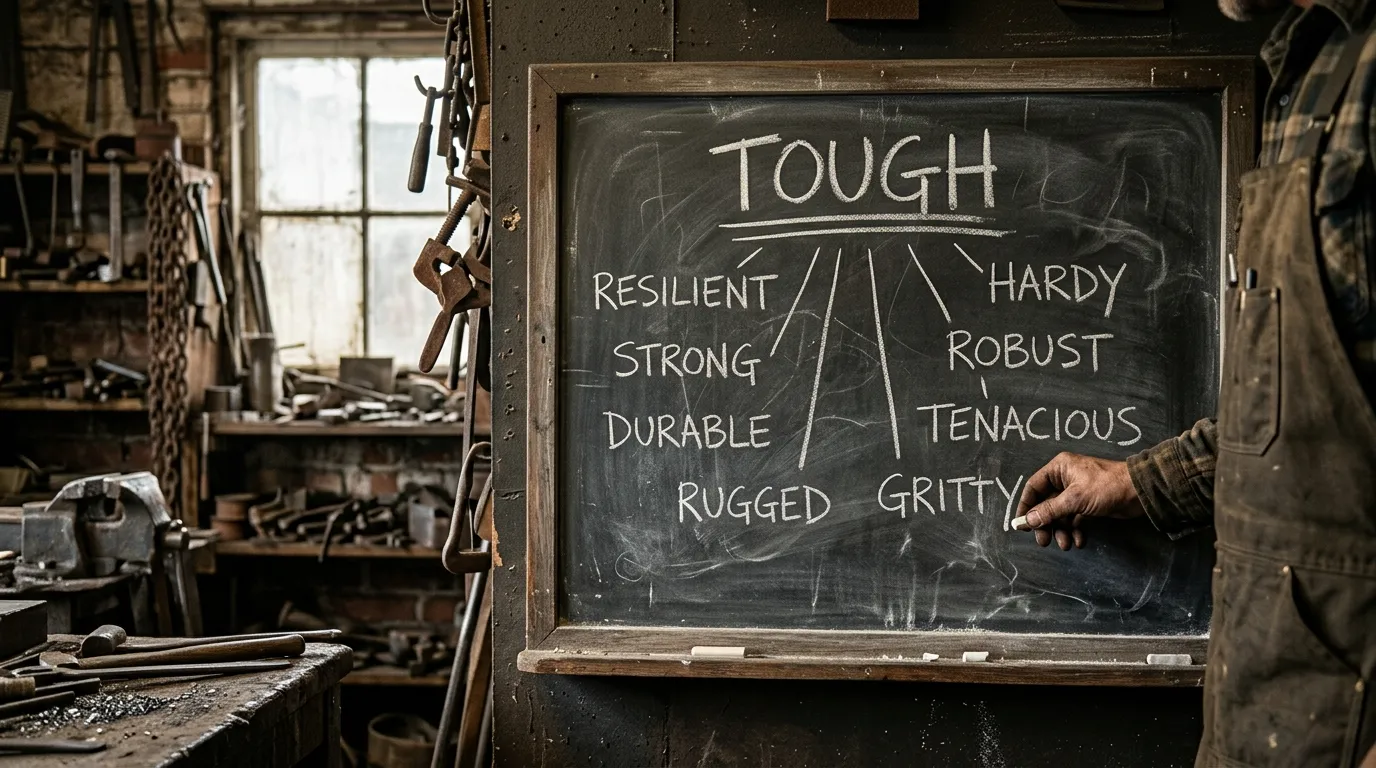
Best Synonyms for Tough With Meanings and Examples
1. Difficult
Meaning: Not easy to do, understand, solve, or manage.
Example: The assignment was tough.
Alternative: The assignment was difficult.
Best for: Schoolwork, problems, decisions, and complicated situations.
Watch out: Difficult is a neutral, widely useful word. It does not necessarily suggest physical strength or emotional resilience.
2. Challenging
Meaning: Requiring effort, ability, or determination.
Example: Learning a new language can be tough.
Alternative: Learning a new language can be challenging.
Best for: Learning, work, personal growth, and tasks that test someone’s abilities.
Watch out: Challenging can sound more positive than difficult because it may suggest an opportunity to learn or improve.
3. Demanding
Meaning: Requiring a great deal of time, energy, attention, or skill.
Example: She has a tough job.
Alternative: She has a demanding job.
Best for: Workloads, schedules, careers, training, and responsibilities.
Watch out: Demanding emphasizes the amount of effort required, not simply how hard something is to understand.
4. Hard
Meaning: Difficult to do, achieve, or deal with.
Example: It was a tough choice.
Alternative: It was a hard choice.
Best for: Everyday conversation, decisions, tasks, and personal experiences.
Watch out: Hard is broad and natural, but it can also mean physically solid or not soft.
5. Arduous
Meaning: Requiring sustained effort and often involving fatigue or hardship.
Example: The team completed a tough journey through the mountains.
Alternative: The team completed an arduous journey through the mountains.
Best for: Long journeys, demanding tasks, difficult projects, and exhausting work.
Watch out: Arduous is more formal than tough and usually emphasizes prolonged effort.
6. Strenuous
Meaning: Requiring a lot of physical or mental effort.
Example: The athletes completed a tough workout.
Alternative: The athletes completed a strenuous workout.
Best for: Exercise, physical labor, training, and activities that use a great deal of energy.
Watch out: Strenuous usually emphasizes exertion, especially physical effort.
7. Complicated
Meaning: Involving many connected parts or details that are difficult to understand.
Example: The case was tough to understand.
Alternative: The case was complicated.
Best for: Technical problems, instructions, systems, and situations with many details.
Watch out: Something can be difficult without being complicated. A simple task may be tough because it requires courage or persistence.
8. Strong
Meaning: Having physical power, emotional strength, or the ability to withstand pressure.
Example: She is a tough leader.
Alternative: She is a strong leader.
Best for: People, arguments, leadership, physical ability, and emotional strength.
Watch out: Strong is broader than tough. It does not always imply the ability to withstand hardship.
9. Resilient
Meaning: Able to recover or adapt after difficulty, stress, or setbacks.
Example: The community remained tough after the disaster.
Alternative: The community remained resilient after the disaster.
Best for: People, communities, organizations, and systems that recover from hardship.
Watch out: Resilient emphasizes recovery and adaptation, not simply being strong or strict.
10. Determined
Meaning: Having a firm intention to reach a goal despite obstacles.
Example: He is tough and refuses to give up.
Alternative: He is determined and refuses to give up.
Best for: Goals, achievements, competitions, careers, and personal struggles.
Watch out: Determined focuses on commitment to a goal. It does not necessarily mean someone can tolerate pain or pressure.
11. Tenacious
Meaning: Holding firmly to a goal or continuing despite difficulties.
Example: She was a tough negotiator who never gave up easily.
Alternative: She was a tenacious negotiator who never gave up easily.
Best for: Negotiation, competition, research, and persistent effort.
Watch out: Tenacious is more formal and can describe either admirable persistence or excessive unwillingness to let go.
12. Persistent
Meaning: Continuing to try or act despite obstacles or delays.
Example: He took a tough approach to solving the problem.
Alternative: He took a persistent approach to solving the problem.
Best for: Repeated effort, learning, investigations, and long-term goals.
Watch out: Persistent emphasizes continuing over time. It does not necessarily imply strength or toughness in every sense.
13. Steadfast
Meaning: Firmly committed to a belief, goal, or decision.
Example: She remained tough in her commitment to fairness.
Alternative: She remained steadfast in her commitment to fairness.
Best for: Principles, loyalty, beliefs, and long-term commitments.
Watch out: Steadfast often sounds formal or literary and focuses on loyalty or consistency.
14. Durable
Meaning: Able to last a long time without becoming damaged or worn out.
Example: The company makes tough outdoor equipment.
Alternative: The company makes durable outdoor equipment.
Best for: Clothing, furniture, tools, equipment, and materials.
Watch out: Durable is best for objects and materials. It is not usually a natural substitute for a tough decision or a tough person.
15. Sturdy
Meaning: Strongly built and unlikely to break or collapse.
Example: They needed a tough table for the workshop.
Alternative: They needed a sturdy table for the workshop.
Best for: Furniture, buildings, tools, equipment, and physical structures.
Watch out: Sturdy emphasizes solid construction and stability rather than resistance to every type of damage.
16. Robust
Meaning: Strong, healthy, or capable of operating well under pressure.
Example: The company needs a tough security system.
Alternative: The company needs a robust security system.
Best for: Technology, systems, plans, businesses, and physical health.
Watch out: Robust often suggests strength combined with reliability or effective performance.
17. Rugged
Meaning: Strong enough to withstand rough conditions or heavy use.
Example: They bought tough boots for hiking.
Alternative: They bought rugged boots for hiking.
Best for: Outdoor gear, terrain, vehicles, equipment, and people who can handle demanding conditions.
Watch out: Rugged often suggests resistance to rough environments and can also describe a rough, weathered appearance.
18. Strict
Meaning: Requiring rules to be followed closely.
Example: The school has tough attendance policies.
Alternative: The school has strict attendance policies.
Best for: Rules, discipline, standards, deadlines, and authority.
Watch out: Strict refers to rules or behavior. It is not a general synonym for something physically strong or difficult.
19. Stern
Meaning: Serious, firm, and not easily persuaded to relax expectations.
Example: The manager gave the team a tough warning.
Alternative: The manager gave the team a stern warning.
Best for: Warnings, expressions, authority figures, and serious conversations.
Watch out: Stern emphasizes seriousness and firmness, often in a person’s manner or tone.
20. Firm
Meaning: Strong, clear, and unlikely to change under pressure.
Example: She took a tough position during negotiations.
Alternative: She took a firm position during negotiations.
Best for: Boundaries, decisions, negotiations, policies, and personal commitments.
Watch out: Firm can suggest reasonable confidence and control, while tough may imply greater harshness or difficulty.
21. Severe
Meaning: Very serious, harsh, or intense.
Example: The town experienced tough weather conditions.
Alternative: The town experienced severe weather conditions.
Best for: Weather, punishment, illness, damage, and serious problems.
Watch out: Severe often carries a stronger negative meaning than tough.
22. Harsh
Meaning: Unpleasantly severe, cruel, or rough.
Example: The workers faced tough conditions.
Alternative: The workers faced harsh conditions.
Best for: Treatment, criticism, weather, living conditions, and difficult experiences.
Watch out: Harsh often adds a negative or uncomfortable tone that tough may not carry.
23. Rough
Meaning: Difficult, unpleasant, or involving hardship.
Example: He had a tough week at work.
Alternative: He had a rough week at work.
Best for: Everyday conversation, difficult periods, uncomfortable experiences, and challenging conditions.
Watch out: Rough is informal in some uses and can also describe an uneven surface or an unpolished result.
24. Grueling
Meaning: Extremely tiring, demanding, or exhausting.
Example: The team completed a tough training session.
Alternative: The team completed a grueling training session.
Best for: Intense exercise, long workdays, demanding competitions, and exhausting schedules.
Watch out: Grueling is stronger than tough and emphasizes exhaustion.
25. Formidable
Meaning: Inspiring respect or fear because of great strength, skill, or difficulty.
Example: They faced a tough opponent in the final.
Alternative: They faced a formidable opponent in the final.
Best for: Competitors, opponents, challenges, obstacles, and powerful organizations.
Watch out: Formidable emphasizes how difficult someone or something is to overcome.
26. Unyielding
Meaning: Not giving in, changing, or weakening under pressure.
Example: The negotiator remained tough throughout the discussion.
Alternative: The negotiator remained unyielding throughout the discussion.
Best for: Positions, attitudes, resistance, and determined behavior.
Watch out: Unyielding can suggest admirable resolve or excessive inflexibility, depending on the context.
27. Stubborn
Meaning: Unwilling to change an opinion, decision, or behavior.
Example: He was tough about changing his mind.
Alternative: He was stubborn about changing his mind.
Best for: Describing resistance to persuasion or unwillingness to compromise.
Watch out: Stubborn often has a negative tone. Use determined or steadfast when you want to emphasize a positive quality.
28. Uncompromising
Meaning: Unwilling to weaken standards, principles, or demands.
Example: The organization took a tough stance on safety.
Alternative: The organization took an uncompromising stance on safety.
Best for: Principles, policies, negotiations, and firm standards.
Watch out: Uncompromising emphasizes refusal to make concessions and may suggest either integrity or inflexibility.
29. Defiant
Meaning: Openly resisting authority, rules, or pressure.
Example: The group remained tough in the face of unfair demands.
Alternative: The group remained defiant in the face of unfair demands.
Best for: Resistance, protest, conflict, and refusal to obey.
Watch out: Defiant implies active resistance. It is not a general substitute for strong or difficult.
30. Relentless
Meaning: Continuing intensely without stopping or easing up.
Example: The team faced tough pressure throughout the match.
Alternative: The team faced relentless pressure throughout the match.
Best for: Pressure, effort, criticism, pursuit, and repeated challenges.
Watch out: Relentless emphasizes persistence and lack of relief. It can describe positive determination or exhausting pressure.
Synonyms for Tough in Different Contexts
Tough meaning difficult or challenging
When you describe a hard task, decision, or situation, consider:
Difficult: A neutral, general word for something not easy.
Challenging: Something that tests ability and may offer growth.
Demanding: Something that requires significant effort or attention.
Arduous: Something that requires sustained effort and may be exhausting.
Complicated: Something involving many parts or details.
Grueling: Something extremely tiring or exhausting.
Examples:
It was a tough assignment.
It was a challenging assignment.
It was a demanding assignment.
Use challenging when you want a constructive tone, demanding when effort is central, and grueling when exhaustion is a major feature.
Tough meaning emotionally strong
When describing someone who withstands hardship, consider:
Resilient: Able to recover from setbacks.
Determined: Committed to achieving a goal.
Tenacious: Persistent despite obstacles.
Steadfast: Firm in beliefs or commitments.
Strong-willed: Having a firm will and resisting pressure.
Unshakable: Not easily disturbed or discouraged.
Examples:
She is a tough person.
She is resilient in difficult situations.
She is determined to overcome setbacks.
These alternatives describe different traits. A resilient person recovers, a determined person pursues a goal, and a steadfast person stays committed to a principle.
Tough meaning physically strong
When describing strength or the ability to withstand damage, consider:
Strong: Having power or strength.
Sturdy: Solidly built and stable.
Robust: Strong and capable of functioning well.
Rugged: Able to withstand rough conditions.
Durable: Able to last without wearing out.
Hard-wearing: Resistant to damage from regular use.
Examples:
The workers needed tough boots.
The workers needed sturdy boots.
The workers needed durable boots.
Use sturdy for solid construction and durable for long-lasting performance. Use rugged when rough environments are involved.
Tough meaning strict or demanding
When describing rules, authority, or discipline, consider:
Strict: Requiring close obedience to rules.
Stern: Serious and firm in manner.
Firm: Clear and unlikely to change under pressure.
Severe: Very harsh or serious.
Uncompromising: Unwilling to make concessions.
Rigid: Inflexible and difficult to adjust.
Examples:
The manager has a tough policy.
The manager has a strict policy.
The manager has an uncompromising policy.
Strict is usually the clearest choice for rules. Stern describes a person’s manner, while uncompromising emphasizes an unwillingness to change.
Tough meaning unpleasant or harsh
For painful periods or difficult conditions, consider:
Rough: Difficult or unpleasant.
Harsh: Unpleasantly severe.
Severe: Very serious or intense.
Brutal: Extremely harsh or demanding.
Grueling: Exhausting and tiring.
Punishing: Causing great strain or fatigue.
Examples:
The family had a tough year.
The family had a rough year.
The family endured a difficult year.
Rough is natural in conversation. Severe works for serious conditions, while brutal and punishing add a stronger sense of hardship.
Comparison Table: Tough vs. Similar Words
| Word | Main meaning | Tone | Best use | Interchangeable with tough? |
|---|---|---|---|---|
| Difficult | Not easy | Neutral | Tasks and problems | Often |
| Challenging | Tests ability | Often positive | Learning and goals | Often |
| Demanding | Requires much effort | Neutral/formal | Work and responsibilities | Sometimes |
| Arduous | Requires sustained effort | Formal | Long, tiring tasks | Sometimes |
| Strong | Has power or strength | Positive/neutral | People and objects | In some contexts |
| Resilient | Recovers from hardship | Positive | People and systems | For emotional strength |
| Determined | Committed to a goal | Positive | Ambition and effort | For persistence |
| Durable | Lasts without damage | Neutral | Materials and products | For physical toughness |
| Sturdy | Solidly built | Neutral | Furniture and structures | For physical strength |
| Strict | Enforces rules | Neutral/negative | Policies and discipline | For authority |
| Stern | Serious and firm | Serious | Warnings and manner | In some contexts |
| Harsh | Unpleasantly severe | Negative | Conditions and treatment | For unpleasantness |
| Grueling | Extremely exhausting | Negative | Workouts and tasks | For extreme difficulty |
| Formidable | Hard to defeat | Respectful/intense | Opponents and obstacles | In some contexts |
| Stubborn | Unwilling to change | Often negative | Opinions and behavior | Sometimes |
| Relentless | Continues without easing | Intense | Pressure and effort | Sometimes |
How to Choose the Right Synonym for Tough
Use this guide to select the word that fits your sentence.
Choose difficult for a general problem or task that is not easy.
Choose challenging when a task tests someone’s skills or ability.
Choose demanding when something requires a lot of time, energy, or attention.
Choose arduous for a long, effortful, or exhausting task.
Choose resilient when someone can recover from setbacks.
Choose determined when someone is committed to reaching a goal.
Choose tenacious when someone continues despite obstacles.
Choose durable when an object lasts through wear or damage.
Choose sturdy when something is solidly built.
Choose strict when rules or standards must be followed closely.
Choose stern when a person or expression is serious and firm.
Choose harsh when conditions or treatment are unpleasantly severe.
Choose formidable when an opponent or obstacle is difficult to overcome.
Choose relentless when pressure or effort continues without relief.
Keep tough when it communicates the intended meaning naturally and clearly.
10 Before-and-After Examples Using Synonyms for Tough
1. Describing an exam
Before: The final exam was tough.
After: The final exam was challenging.
Why it works: Challenging emphasizes the skills and effort the exam required.
2. Describing a job
Before: She has a tough job that requires long hours.
After: She has a demanding job that requires long hours.
Why it works: Demanding highlights the workload and time commitment.
3. Describing emotional strength
Before: He stayed tough after losing his job.
After: He stayed resilient after losing his job.
Why it works: Resilient emphasizes the ability to recover from hardship.
4. Describing a product
Before: These are tough shoes for outdoor work.
After: These are durable shoes for outdoor work.
Why it works: Durable focuses on lasting through regular use.
5. Describing a strict teacher
Before: The teacher is tough about deadlines.
After: The teacher is strict about deadlines.
Why it works: Strict directly describes the enforcement of rules.
6. Describing a difficult journey
Before: The hikers faced a tough climb.
After: The hikers faced an arduous climb.
Why it works: Arduous emphasizes sustained physical effort.
7. Describing a competitor
Before: Our team faced a tough opponent.
After: Our team faced a formidable opponent.
Why it works: Formidable emphasizes the opponent’s strength and difficulty to defeat.
8. Describing a difficult period
Before: It was a tough year for the family.
After: It was a rough year for the family.
Why it works: Rough is a natural alternative for an unpleasant or difficult period.
9. Describing a firm decision
Before: The company took a tough position on safety.
After: The company took an uncompromising position on safety.
Why it works: Uncompromising emphasizes that the company would not weaken its standards.
10. Describing persistent pressure
Before: The athletes faced tough pressure during the competition.
After: The athletes faced relentless pressure during the competition.
Why it works: Relentless emphasizes pressure that continues without easing.
Common Mistakes When Using Synonyms for Tough
1. Treating difficult and tough as identical in every context
Difficult usually describes something that requires effort. Tough can also suggest strength, durability, harshness, or strictness.
Better approach: Use difficult for tasks and problems, and choose a more specific word for other meanings.
2. Using resilient to describe a difficult task
Resilient generally describes the ability to recover or adapt after hardship. It does not usually mean that something is difficult.
Better approach: Say “a challenging task” or “a demanding task.”
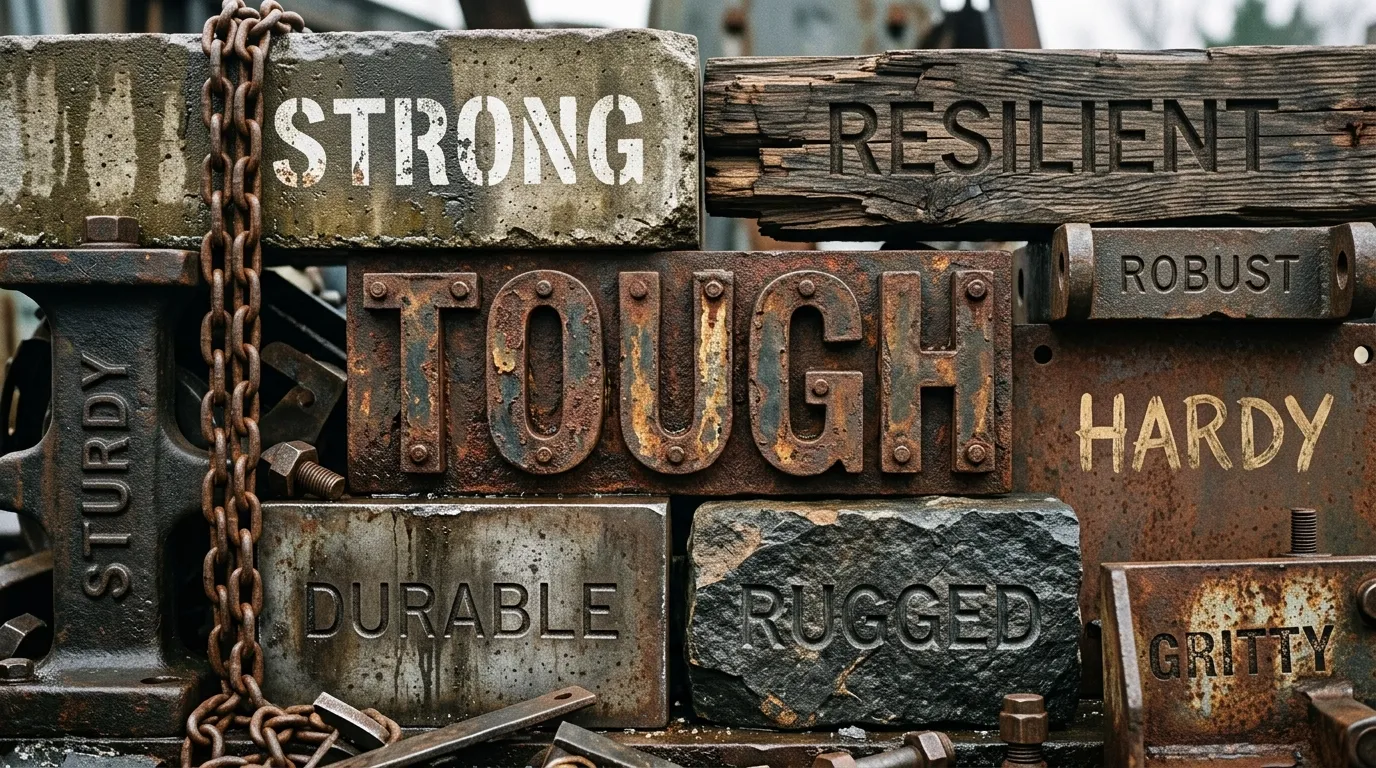
3. Confusing durable with strong
Strong describes strength or power. Durable emphasizes lasting through use or wear.
Better approach: Use durable for long-lasting products and strong when emphasizing power or resistance.
4. Using stubborn as a compliment
Stubborn often suggests unreasonable refusal to change. It can sound critical.
Better approach: Use determined, persistent, or steadfast when you want a more positive meaning.
5. Replacing tough with strict in every situation
Strict relates to rules and standards. It does not mean difficult, physically strong, or emotionally resilient.
Better approach: Use strict for discipline and challenging for tasks.
6. Using harsh when you only mean difficult
Harsh often implies unpleasant treatment, severe conditions, or cruelty.
Better approach: Use difficult or challenging when no negative or cruel quality is intended.
7. Using arduous for ordinary problems
Arduous suggests sustained and often exhausting effort. It may sound excessive for a small task.
Better approach: Use hard or difficult for everyday situations.
8. Confusing stern and severe
Stern often describes a person’s manner or expression. Severe describes something very serious, intense, or harsh.
Better approach: Write “a stern warning” or “severe consequences,” depending on the intended meaning.
9. Using formidable to describe every hard task
Formidable usually suggests something impressive or intimidating because of its strength, size, or difficulty.
Better approach: Use challenging or difficult for ordinary tasks.
10. Replacing tough just to avoid repetition
Tough is a common, flexible word. A more formal alternative is not automatically more accurate.
Better approach: Keep tough when it is the clearest choice, or select a more specific word when the context calls for one.
Grammar and Usage: How to Use Tough Correctly
Tough as an adjective
Tough usually appears before a noun or after a linking verb.
It was a tough decision.
She is tough under pressure.
They faced tough conditions.
This material is tough and durable.
Common patterns with tough
These expressions are natural in everyday American English:
a tough decision
a tough question
a tough job
a tough competition
a tough opponent
a tough situation
a tough time
tough conditions
tough rules
tough love
tough enough to handle something
tough on someone or something
Tough vs. toughen
Tough is an adjective, while toughen is a verb meaning to become or make stronger or more resistant.
The training was tough.
The training helped toughen the athletes.
Experience can toughen a person.
Tough vs. toughly
Toughly is uncommon in everyday English. Writers usually choose a more natural expression, such as firmly, strictly, or harshly, depending on the intended meaning.
Less natural: The manager spoke toughly.
More natural: The manager spoke sternly.
More natural: The manager dealt with the issue firmly.
Common collocations with tough
tough decision
tough question
tough challenge
tough competition
tough opponent
tough conditions
tough deadline
tough negotiator
tough material
tough exterior
tough situation
tough times
Usage tip: The noun that follows tough often reveals which synonym is most suitable. A tough deadline is demanding, a tough opponent is formidable, and a tough material is durable.
Frequently Asked Questions
1. What is the best synonym for tough?
The best synonym depends on the context. Difficult works for problems, challenging for tasks that test ability, resilient for people who recover from hardship, and durable for objects that last.
2. What is a formal synonym for tough?
Formal alternatives include arduous, demanding, resilient, formidable, uncompromising, and severe. Use the word that matches the intended meaning rather than choosing a formal word simply to sound more professional.
3. What is another word for tough in an essay?
Useful choices include challenging, demanding, difficult, strenuous, and arduous. For a person who withstands hardship, consider resilient or determined.
4. What is another word for a tough person?
Depending on the person’s qualities, use resilient, strong, determined, tenacious, steadfast, or formidable. Resilient emphasizes recovery, while tenacious emphasizes persistence.
5. What is another word for a tough situation?
Possible alternatives include difficult situation, challenging situation, harsh circumstances, serious predicament, and trying circumstances. Choose based on whether the situation is demanding, unpleasant, or especially serious.
6. What is the difference between tough and resilient?
Tough can describe strength, endurance, difficulty, or strictness. Resilient specifically emphasizes the ability to recover or adapt after setbacks.
7. What is another word for tough in a positive sense?
Positive alternatives include resilient, determined, strong, tenacious, steadfast, and courageous. The best option depends on whether you mean recovery, commitment, persistence, or bravery.
Editor’s Choice: The 5 Best Alternatives to Tough
Difficult: Best general replacement for a task or problem that is not easy.
Challenging: Best for tasks that test ability and offer opportunities to improve.
Resilient: Best for a person or group that recovers from hardship.
Durable: Best for materials and products that withstand wear.
Demanding: Best for work, responsibilities, and activities that require significant effort.
These five options cover common meanings without confusing difficulty with strength or durability.
Key Takeaways
Tough can mean difficult, strong, resilient, durable, strict, or harsh.
Use difficult for problems and challenging for tasks that test ability.
Use resilient for recovery from hardship and determined for commitment to a goal.
Use durable for long-lasting objects and strict for rules or discipline.
Choose the synonym that matches the context, and keep tough when it is the clearest and most natural option.